

Moby-Dick
Herman Melville, 625 pages

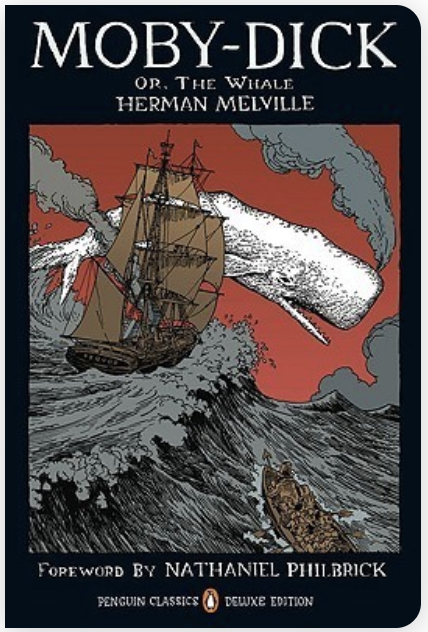
Just like the whale, this book was a beast. A slow, arduous read that was saved—thankfully—by very short chapters. I would characterize the whalemen’s dialogue throughout the book as Old English Pirate — difficult to follow without focused effort. I appreciated Melville’s unique interruption of narrative with nonfiction-like chapters (not written in Old English Pirate), providing backstory on whales and the whaling industry. The book benefited from these informational chapters, adding a certain layering element to the journey. The problem was I didn’t find the info on whaling all that interesting, and like everything else in the book, there was too much of it. I didn’t need a dedicated chapter on the whale’s head. Melville would explain the subject matter (the anatomy of a whale’s mouth, for example) and then use the same subject as an analogy to express some deeper philosophical thought. The explain-then-pontificate device became repetitive and tiring. The first 125 pages of the book were unhurried and goofy. The back half bogged down with too many anecdotes purposely intended as foreshadowing. After nearly 600 pages of random whale trivia interspersed with a middling plot, the resolution of the story felt slim and a bit of a disappointment. There is plenty that could be studied when it comes to the motivations and behaviors of the main characters. A lot was left for the reader to interpret. I suppose that’s why this book persists.
